DEVELOPING AN ACTIVE LIFE POSITION IN SCHOOLCHILDREN WITHIN THE IMPLEMENTATION OF THE FEDERAL STATE EDUCATIONAL STANDARD
DOI:
https://doi.org/10.5281/zenodo.20004412Keywords:
active life position, personality, schoolchild, formation, personal results, Federal State Educational Standard of Basic General Education, pedagogical diagnostics, assessment criteria, spiritual and moral educationAbstract
This article examines the terminological ambiguity surrounding the concept of "active life position" (ALS) in the context of the Federal State Educational Standard for Basic General Education (FSES BGE). The relevance of this study stems from the need to develop students' personal development in the absence of unified methodological approaches to defining the essence of ALS and its assessment criteria. The aim of this study is to use a content analysis of philosophical and pedagogical literature to clarify the essence of ALS, identify teachers' substantive understanding of this category, and propose criteria for its development in basic school students. Research methods: theoretical analysis and synthesis of scientific literature, personal interviews (n = 57 teachers from a basic school in Birobidzhan), and thematic categorization of empirical data. Results: The study revealed that two main approaches to understanding ALP have developed in the scientific literature: the activity-social approach (the Soviet pedagogical tradition) and the spiritual-moral approach (modern research), with no integrative model between them. Empirical data indicate a diffuse interpretation of ALP in the professional consciousness of teachers: only 27.9% of respondents associate this concept with the social orientation of the individual, while the majority associate it with a non-specific "activity" (30.1%) or "life activity" (22.8%). The identified semantic discrepancy creates the risk of inconsistency in educational interventions in the formation of personal outcomes. Conclusions: An active lifestyle is a complex, multi-faceted phenomenon that requires further philosophical and pedagogical understanding. This article substantiates the need to develop criteria-based tools for assessing the development of an active lifestyle, including the ability to critically evaluate one's own activities, perceive feedback, conduct social comparisons, and make independent decisions based on traditional cultural norms. The proposed criteria can be used to assess students' personal performance within the framework of the Federal State Educational Standard for Basic General Education. The scientific novelty lies in the clarification of the essence of the ALP from the standpoint of integrating the activity-based and value-semantic approaches, as well as in the empirical recording of the substantive associations of teachers with this category, which allows us to reduce the risks of terminological ambiguity in educational practice.
Downloads
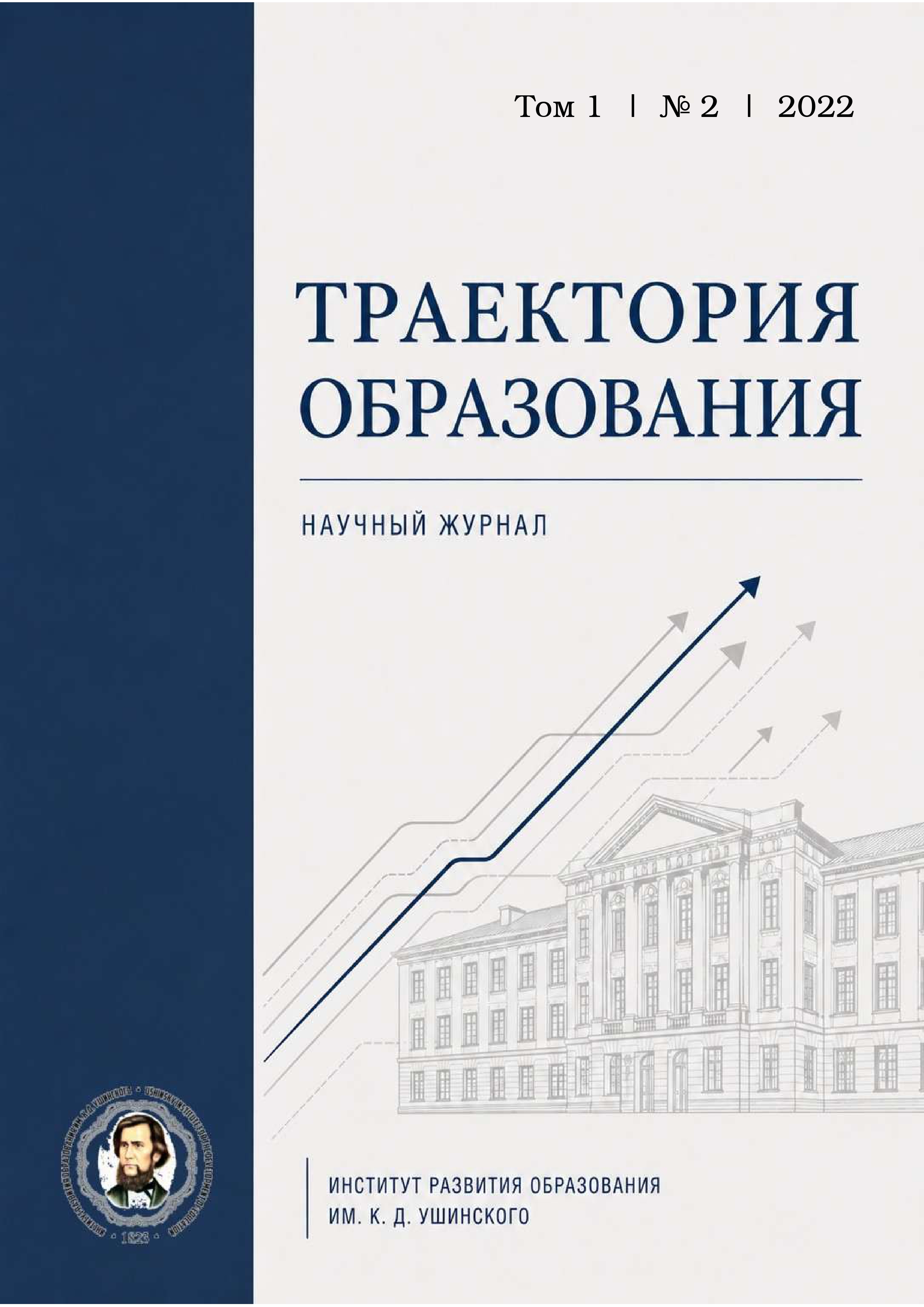
Downloads
Published
Issue
Section
License
Copyright (c) 2026 Роман Васильевич Просянок (Автор)

This work is licensed under a Creative Commons Attribution 4.0 International License.
Open Access Policy
The journal “Trajectory of Educational” provides direct open access to its content based on the following principle: free open access to research results contributes to increasing global knowledge sharing.
“Trajectory of Educational” supports the Open Access Policy which is in line with the definition of the Budapest Open Access Initiative Declaration (BOAI) and means that published articles are openly available on the Internet for free, allowing all users to read, download, copy, distribute, print, search or link to the full text of these articles, scan them for indexing, transfer them as data for software, or use them for any other legitimate purpose without financial, legal or technical barriers, except those that are inseparable from access to the Internet itself, without asking prior authorization from the author and publisher.
At the same time, users have the right to use the materials in their publications, provided that a reference to the journal publication is made.
The articles of this journal are available to everyone from the moment of publication under the Creative Commons Attribution 4.0 License (CC BY 4.0). This license grants full use and the right to reproduce to everyone, provided that the work is attributed to the original authors.